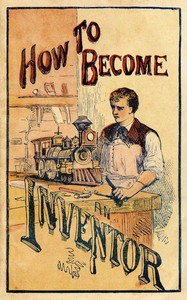
Free digital classic
How to become an inventor: Containing experiments in photography, hydraulics, galvanism and electricity, magnetism, heat, and the wonders of the microscope
Get Folarin Bookstore Digital on Google PlayAbout this book
Creators: Aaron A. Warford "How to Become an Inventor" by Frank Tousey is a scientific publication written in the late 19th century. This guidebook serves as an introductory manual for young inventors and aspiring tinkerers, providing detailed instructions on a wide range of topics such as experiments in photography, hydraulics, galvanism, and magnetism. It aims to equip readers with practical skills and knowledge for creating projects and conducting experiments that illuminate fundamental scientific principles. The opening of the text establishes the importance of hands-on skills, particularly in carpentry, suggesting that being handy is invaluable for young people. Tousey emphasizes the significance of learning to make things for oneself to avoid unnecessary costs, exemplified through anecdotes about carpentry expenses. The author provides practical advice on constructing a workspace, equipping it with necessary tools, and lays the groundwork for future sections that delve into various scientific experiments and mechanical principles. This approachable style is consistent throughout the introductory portion, setting a tone of exploration and creativity aimed at young inventors ready to learn and experiment. (This is an automatically generated summary.) Reading Level: Reading ease score: 62.9 (8th & 9th grade). Neither easy nor difficult to read. Rights: Public domain in the USA. Downloads: 449